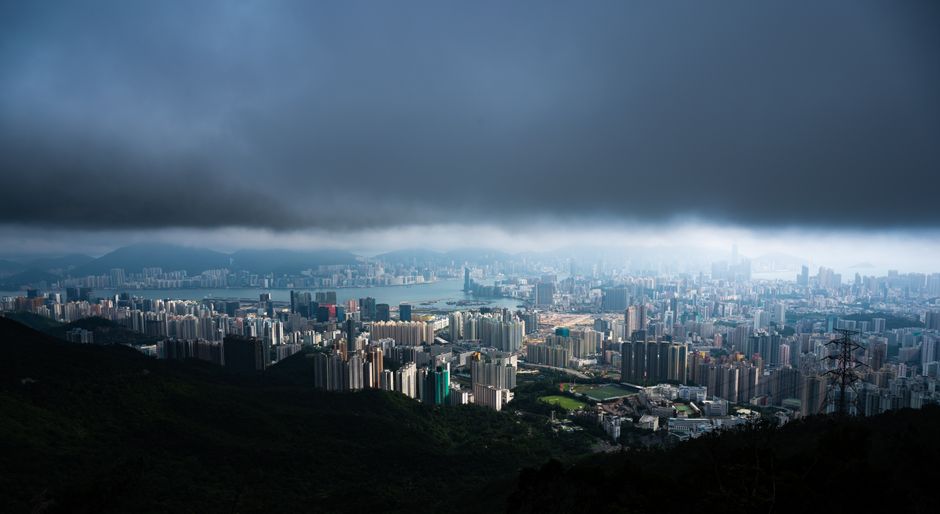
At least a dozen creative agencies clustered around Wan Chai's Star Street precinct and the co-working hubs of Kwun Tong's APM commercial district have switched to AI-driven duplicate image replacement systems in the past seven days, according to conversations with practitioners in Hong Kong's digital production sector. The shift accelerated after a major regional e-commerce operator notified vendors in late June that product listings carrying repeated or near-duplicate visuals would be downranked in search results from 1 July 2026.
The timing matters. Hong Kong's retail and publishing sectors are still absorbing the operational turbulence of the past three years — reduced headcount at many studios, tighter budgets, and the pressure to compete with lower-cost production pipelines operating across the border in Shenzhen and Guangzhou as Greater Bay Area integration deepens. Cleaning image libraries manually has long been a junior-staff task, but junior design roles have shrunk noticeably at agencies along Queen's Road Central and in the Cyberport tech cluster in Pok Fu Lam. Automation is filling that gap.
The core function is straightforward: software scans an asset library, flags visually identical or near-identical images using perceptual hashing or embedding-based similarity models, and either deletes redundant files automatically or queues them for human review before replacement. What changed this week is the availability of tools that can handle Traditional Chinese watermarks, bilingual metadata fields and the mixed-script file naming conventions common in Hong Kong production workflows — a gap that had frustrated local users of generic Western-built platforms.
What Happened This Week
On Tuesday, Hong Kong-based digital asset management firm Prizm Digital announced it had integrated a locally tuned duplicate-detection module into its platform, specifically calibrated for the HKTV Mall and Boutir vendor ecosystems. The company, whose office sits inside the Tricor Tower in Wan Chai, said the module processes batches of up to 50,000 images in under four minutes on standard cloud infrastructure — roughly eight times faster than its previous manual-review pipeline. Pricing for the new tier starts at HK$1,800 per month for agencies handling fewer than 200,000 assets.
Separately, the Hong Kong Productivity Council — which runs advisory programmes for small and medium enterprises from its headquarters in Kowloon Tong — published a guidance note on Wednesday listing duplicate image replacement as one of five priority automation workflows for SME creative businesses seeking to apply for the Innovation and Technology Fund's Dedicated Fund on Branding, Upgrading and Domestic Sales, known as the BUD Fund. The note recommends that eligible businesses document baseline image-processing hours before applying, to demonstrate efficiency gains to assessors. BUD Fund project grants can reach HK$7 million per enterprise under current programme rules.
The push comes as Hong Kong's advertising and media production sector recorded a contraction in billable headcount over the 12 months to March 2026, based on data published by the Census and Statistics Department's quarterly Survey on Computer Usage and Penetration. Studios report that image asset libraries have grown substantially — one mid-sized agency in Sheung Wan described libraries exceeding 400,000 files accumulated across a decade of client campaigns — while the teams responsible for curating them are smaller than they were in 2021.
What Agencies Should Do Now
The practical advice circulating among production managers this week is to audit existing asset libraries before migrating to any automated replacement system. Duplicate replacement tools trained on Western stock-image datasets can misidentify visually similar product shots of traditional Chinese goods — mooncake packaging, jade jewellery, and red-pocket designs present particular edge cases — and flag unique images for deletion erroneously. Running a manual spot-check on flagged batches before committing to deletion remains standard practice among cautious studios.
Agencies planning to apply for BUD Fund support should note that the next assessment window opens on 15 August 2026. The Hong Kong Productivity Council's Kowloon Tong centre is holding a briefing session on 10 July specifically for creative-sector applicants, covering documentation requirements for automation projects. Registration for that session opened this week via the HKPC's online portal.