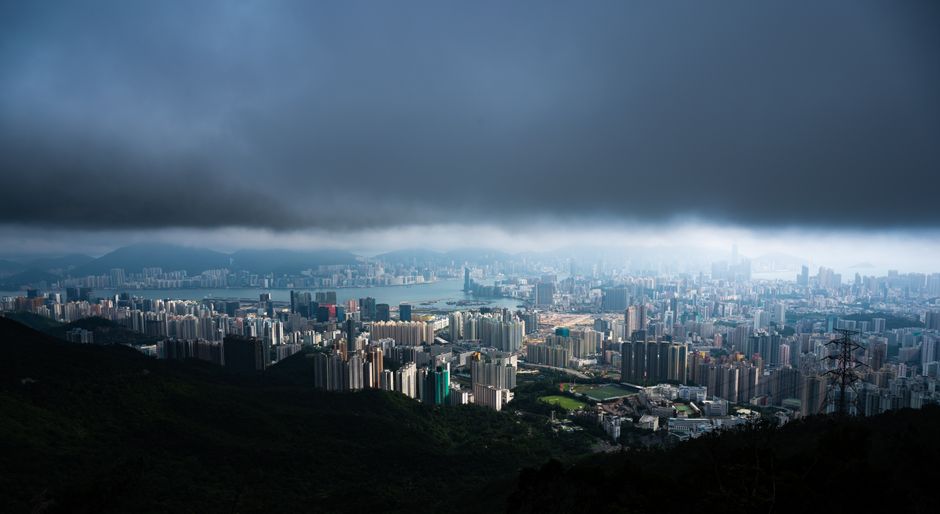
Tens of thousands of duplicate images are sitting inside Hong Kong's public and private digital infrastructure — redundant photographs clogging land registry filings, property listings on platforms operating out of Wan Chai and Kwun Tong, and identification records processed through the Immigration Department's offices on Immigration Tower in Wan Chai. The problem is not new, but the decisions about how to fix it are arriving at a moment when getting it wrong carries real costs.
The urgency is sharper now because of two converging pressures. Greater Bay Area integration means Hong Kong databases increasingly need to interoperate cleanly with Mainland counterparts in Shenzhen and Guangzhou — and duplicate or mismatched image records create friction at every data handshake. Simultaneously, the city's push to remain competitive with Singapore as a financial hub has put pressure on the efficiency of back-office compliance systems, where duplicate imagery in Know Your Customer files adds hours to onboarding reviews at banks clustered along Des Voeux Road Central.
Where the Backlog Is Concentrated
The heaviest concentrations of the problem sit in three areas. Property records held by the Land Registry — which processed more than 64,000 sale and purchase agreements in 2024 alone — contain scanned documents where the same floor plan image has been filed multiple times under different case numbers. The Rating and Valuation Department, which maintains photographic records for more than 270,000 assessable properties across the territory, has been running a digitisation programme since 2022 that flagged internal duplication as an unresolved item. And in the private sector, real estate portals operating out of Kowloon Bay and Quarry Bay carry listing photographs that have been re-uploaded by multiple agents for the same unit, creating metadata conflicts that affect search accuracy and, in some cases, mortgage valuations.
The Hong Kong Monetary Authority's guidelines on digital operational resilience, updated in late 2024, explicitly require licensed institutions to maintain clean, non-redundant image archives as part of broader data governance standards. Banks that fail a periodic audit on this point face remediation timelines — typically 90 days — and potential supervisory follow-up. Several mid-tier lenders with retail operations in Mong Kok and Causeway Bay are understood to be mid-way through exactly those reviews, though no enforcement actions have been publicly disclosed.
The Decisions That Cannot Wait
Three choices are going to define how this plays out over the next 12 to 18 months. First, whether government bureaux adopt a shared deduplication utility or each department builds its own. A shared tool, potentially hosted through the Office of the Government Chief Information Officer on Queensway, would cut costs and impose consistent standards, but requires departments to agree on image classification rules that currently differ between, say, the Buildings Department and the Lands Department. Second, whether the private sector moves voluntarily or waits for a regulatory mandate. The Personal Data Privacy Ordinance already creates liability for retaining unnecessary copies of images that contain personal data — a point that applies directly to any photograph showing a person's face filed inside a KYC record. Third, how quickly organisations invest in hash-based deduplication tools, which compare a compressed digital fingerprint of each image rather than the image itself, making the process both faster and privacy-preserving.
The cost of doing nothing is not abstract. Storage fees for enterprise cloud infrastructure used by Hong Kong firms, priced in US dollars through providers with data centres in Tseung Kwan O, have risen roughly 15 percent over the past two years as demand from Greater Bay Area data routing has grown. Every duplicate image is a small but real line item on that bill. Across a large bank's KYC archive, the redundancy can run into hundreds of gigabytes.
Practically, organisations that have not already begun a scoping exercise should start by auditing their highest-volume intake channels — the places where images arrive fastest and with least human review. For most financial institutions in Hong Kong that means mobile onboarding flows. For government departments it means the document scanning lines at public-facing service counters in Kowloon and on Hong Kong Island. Getting a count of the duplication rate in those channels by the end of the third quarter of 2026 is the minimum baseline any serious remediation plan will require.