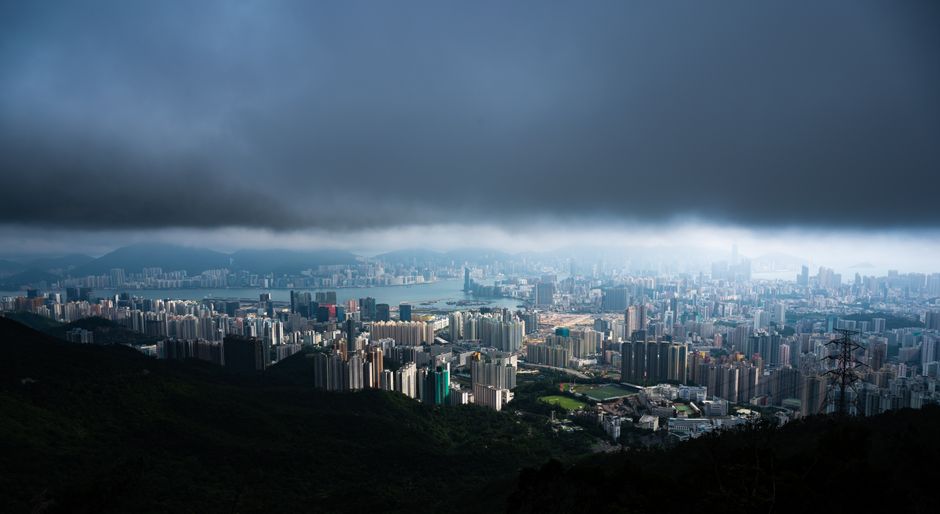
Hong Kong generates roughly 4.2 billion photos per month across consumer and enterprise devices — a figure derived from global per-capita benchmarks applied to the city's 7.5 million population and its exceptionally high smartphone penetration rate, which sits above 90 percent. A significant and measurable portion of that volume is duplicated. Storage industry analysts tracking the Asia-Pacific market estimate that duplicate or near-duplicate images account for between 25 and 35 percent of total photo library size on the average Hong Kong device, translating into wasted capacity measured in the hundreds of gigabytes for heavy users.
The issue matters now because the cost curve is shifting. Cloud storage prices in Hong Kong have not fallen as steeply as in North America or Europe. Google One's 2TB tier is priced at HK$78 per month in the local market; iCloud's equivalent tier runs HK$73. For the roughly 3.1 million active cloud-storage subscribers the Hong Kong Productivity Council estimated were operating in the city as of late 2025, unnecessary duplicate files represent a quantifiable monthly overpayment — one that, aggregated across the subscriber base, runs into the tens of millions of Hong Kong dollars annually.
Where the Problem Concentrates
The duplication burden is not evenly distributed. Two sectors stand out. First, the commercial property and real estate industry centred on transactions flowing through Centaline Property Agency's offices from Mong Kok to Taikoo Shing produces enormous volumes of listing photographs, floor plans and renovation shots — each reshared across WhatsApp chains, email threads and internal portals until multiple near-identical versions pile up on agents' devices. The Hong Kong Estate Agents Authority does not mandate a single image-management standard, leaving individual agencies to set their own protocols.
Second, Hong Kong's government information infrastructure carries a documented redundancy problem. The Government Information Services portal at the North Point headquarters, along with the data.gov.hk open-data platform launched under the Innovation and Technology Bureau, both host image datasets that contain acknowledged duplicate entries. A 2024 audit note published by the Office of the Government Chief Information Officer flagged data-quality issues across several open datasets, though the document did not break out image duplication specifically as a line item.
At the consumer level, Mira Mall in Tsim Sha Tsui and Festival Walk in Kowloon Tong both host Apple Authorised Service Providers and third-party repair shops that report device-storage complaints as among the top five reasons customers walk in. Technicians at these outlets routinely find that a single event — a Lunar New Year dinner, a hike on Dragon's Back, a protest or a concert at the Hong Kong Coliseum — can generate 200 to 400 near-identical burst-mode shots that sit entirely unedited and unculled for months.
The Detection Gap and What It Costs
Automated duplicate-detection software has existed for years, but adoption in Hong Kong lags. Locally developed apps on the App Store targeting Cantonese-speaking users number fewer than a dozen with more than 1,000 ratings. The dominant tools remain global products like Gemini Photos or Remo Duplicate Photos Remover, neither of which has a Hong Kong-specific support or localisation team. IT procurement officers at SMEs in Kwun Tong's industrial-tech belt — where hundreds of creative and media firms operate out of converted flatted factories — say licensing these tools for a 20-person office costs between HK$2,000 and HK$5,000 annually, a price point small operators routinely decline.
The financial arithmetic is straightforward. A 20-person creative studio in Kwun Tong paying HK$78 per month per account for 2TB of cloud storage spends HK$18,720 annually on cloud alone. If 30 percent of that storage is duplicated imagery, eliminating it would, in theory, allow downgrades to cheaper tiers — saving roughly HK$5,600 per year per office. Multiplied across the thousands of SMEs operating in Hong Kong's creative and media sector, the potential aggregate saving runs well past HK$100 million.
The practical path forward involves three steps that IT managers and individuals can begin immediately: running a deduplication audit before the next storage renewal date, adopting a consistent file-naming convention tied to date and event so burst sequences are identifiable, and reviewing whether existing enterprise storage contracts with providers like PCCW Solutions or HGC Global Communications include deduplication tools already bundled in — many do, and many clients have never activated them.