Hong Kong's communications and advertising ecosystem is grappling with a problem years in the making: the mass circulation of duplicate and unlicensed images across digital platforms, printed collateral, and government publications has reached a scale that intellectual property lawyers and media compliance officers say can no longer be ignored.
The issue matters now because enforcement has tightened. Since the Office of the Communications Authority updated its digital content guidelines in late 2024, companies found republishing identical stock imagery without distinct licensing agreements face escalating fines. Several firms in Wan Chai's media district and along Canton Road in Tsim Sha Tsui have already received compliance notices this year, according to industry briefings circulated among members of the Hong Kong Journalists Association.
A Problem Built Over Years
The roots of the duplicate image crisis trace back to the mid-2010s, when the explosion of social media marketing made cheap, fast content the industry default. Agencies in Sheung Wan and Causeway Bay routinely purchased single-seat licences from international stock libraries — Getty Images and Shutterstock were dominant — then redistributed those assets internally across multiple client campaigns. The practice was widespread and largely unchallenged.
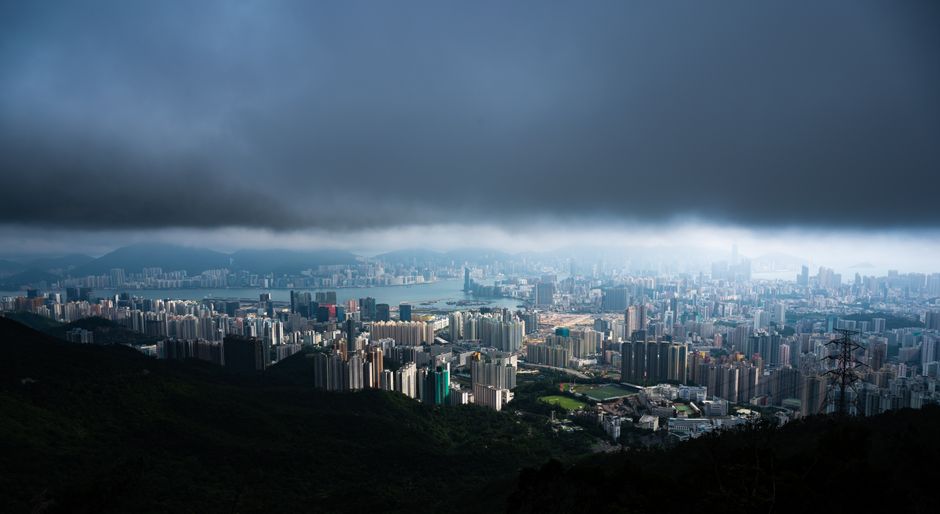
By 2019, the disruption to normal business activity accelerated the problem. Marketing budgets were slashed. Teams were reduced. The shortcuts that had been semi-tolerated became embedded habits. Companies pulled from the same small pools of free-tier image sources, meaning a hotel in Tsim Sha Tsui and a Mong Kok restaurant might run promotions using the identical photograph of a generic skyline or food spread. The visual sameness became a running joke in local creative circles — but the legal exposure was real and accumulating.
After 2020, the departure of a significant portion of Hong Kong's creative workforce — part of the broader emigration wave to the United Kingdom and Canada following changes to the political landscape — left many in-house design teams understaffed. Surviving teams leaned harder on automated content tools and shared asset libraries, compounding the duplication. The Hong Kong Trade Development Council noted in its 2023 annual review that the city's creative services sector had contracted meaningfully since 2019, though precise employment figures for that subset were not broken out separately.
The Compliance Reckoning
The Intellectual Property Department, which sits under the Commerce and Economic Development Bureau, began a structured industry consultation in the first quarter of 2025 focused specifically on digital image licensing. That process concluded in November 2025 with a set of recommended standards for commercial publishers, advertising agencies, and public-sector communications teams. The standards, while not carrying immediate statutory force, put organisations on notice that a tighter regime was coming.
Local universities moved first. The Hong Kong Polytechnic University's School of Design updated its student and alumni licensing guidance in January 2026, explicitly flagging duplicate image submission as an academic integrity issue distinct from — but related to — plagiarism. City University of Hong Kong followed with a revised media production policy in March 2026.
For commercial operators, the practical exposure is financial. A standard extended commercial licence from a major stock library runs between HK$3,000 and HK$12,000 per image depending on circulation size, according to published rate cards. Many companies had been operating on licences costing a fraction of that, leaving themselves exposed to retrospective claims. Law firms in Central have reported a noticeable uptick in pre-litigation letters from image rights holders since the start of 2026.
Businesses that have not already audited their visual asset libraries would be well advised to do so before year's end. The Intellectual Property Department's recommended standards are expected to move toward formal regulation in the second half of 2026. Agencies with operations in both Hong Kong and the broader Greater Bay Area face an additional layer of complexity, since Mainland licensing frameworks differ substantially from those in the Special Administrative Region. Getting the paperwork right now is cheaper than contesting an enforcement action later.