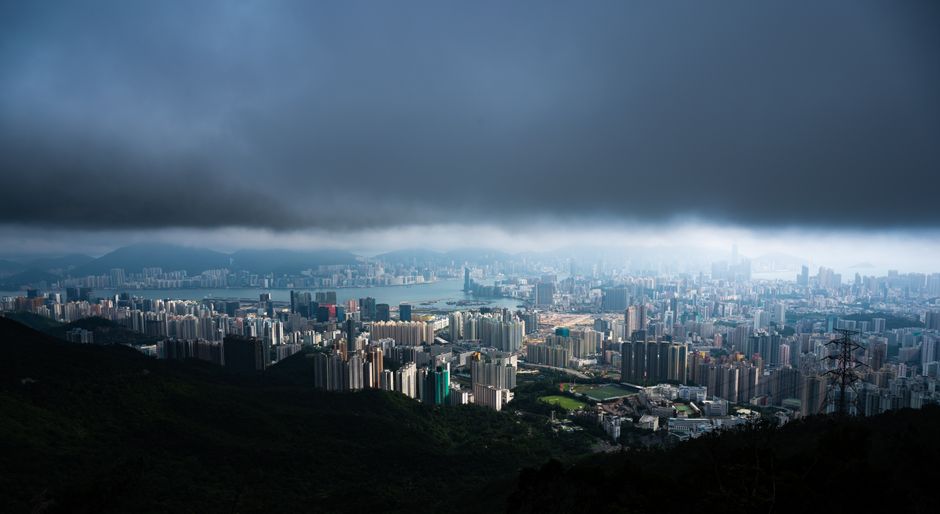
Hong Kong's urban environment generates an enormous volume of reproduced imagery every year. Outdoor advertising panels in Causeway Bay, digital screens along Canton Road in Tsim Sha Tsui, government publications, tourism materials and commercial databases all draw on a relatively shallow pool of licensed photographs and graphics — producing widespread duplication that costs businesses, muddies brand identities and creates legal exposure under copyright law. The problem has grown sharper as Greater Bay Area integration pushes Hong Kong firms to publish content simultaneously across Cantonese, Mandarin and English channels, multiplying the demand for original assets at a pace that stock libraries have not kept up with.
The timing matters. Hong Kong's post-Article 23 business environment has placed renewed emphasis on reputational precision. A company recycling the same skyline photograph of Victoria Harbour across a dozen client-facing documents risks looking careless to the mainland institutional investors it is now actively courting, particularly when Singapore rivals are producing visually distinct, locally rooted content. Creative agencies on Wyndham Street have privately flagged the issue for at least two years, though formal industry benchmarking has been slow to arrive.
What Hong Kong Is Doing — and What It Is Not
The Hong Kong Design Centre, headquartered in the PMQ complex on Aberdeen Street in Sheung Wan, has run periodic workshops on original visual content production under its Create Smart initiative, a program backed by the Innovation and Technology Commission. The programme targets SMEs and encourages commissions from local photographers and illustrators rather than reliance on international stock platforms such as Getty or Shutterstock, where the same images surface across markets from Kuala Lumpur to Lagos. The Hong Kong Copyright Tribunal also updated its guidance in 2024 on reverse-image search obligations for commercial publishers, clarifying when reuse of an unlicensed duplicate constitutes infringement.
Yet the city has no centralised duplicate-detection mandate comparable to what Singapore introduced in 2023 under its Infocomm Media Development Authority framework, which requires government contractors producing public communications above a defined budget threshold to run submissions through a verified image-originality check before publication. London's Government Communication Service issued similar internal standards for Crown departments in early 2025, partly in response to embarrassing cases where stock photographs used in National Health Service campaigns turned out to be recycled from years-old commercial advertising. Hong Kong's equivalent — the Information Services Department, based in Queensway Government Offices in Admiralty — has no publicly disclosed equivalent requirement as of this month.
The Gap With Singapore Is Measurable
Singapore's IMDA reported in its 2025 annual review that duplicate or unlicensed image use in government-adjacent communications fell by roughly 34 percent in the two years following its contractor framework, according to figures published on the authority's website. Hong Kong has produced no comparable audit. The city's advertising industry body, the Hong Kong Advertisers Association, estimated in a 2024 survey of its membership that between 40 and 55 percent of digital display campaigns in the city used at least one image that had appeared in a competitor's campaign within the previous 12 months — a figure the association described as an industry-wide concern in the survey's published summary.
The commercial stakes are not trivial. A licensing dispute over duplicate imagery can run to six-figure Hong Kong dollar settlements under the Copyright Ordinance, and the risk is amplified for firms operating simultaneously in Hong Kong and Shenzhen, where mainland intellectual property enforcement has become considerably more aggressive since 2022.
For businesses operating out of Kwun Tong's creative cluster or the co-working spaces near K11 Musea in Tsim Sha Tsui, the practical advice from intellectual property solicitors is straightforward: run every image intended for publication through a reverse-search tool such as Google Images or TinEye before sign-off, maintain dated records of licensing agreements, and budget for original commissioned photography rather than treating stock libraries as a free resource. The Hong Kong Design Centre's Create Smart portal lists vetted local photographers available for commercial work. Firms tendering for Greater Bay Area contracts in particular should treat image provenance documentation as a standard deliverable, not an afterthought — the gap between Hong Kong's current practice and Singapore's regulated baseline is one that regulators here may eventually close, and it is cheaper to get ahead of it than to catch up later.