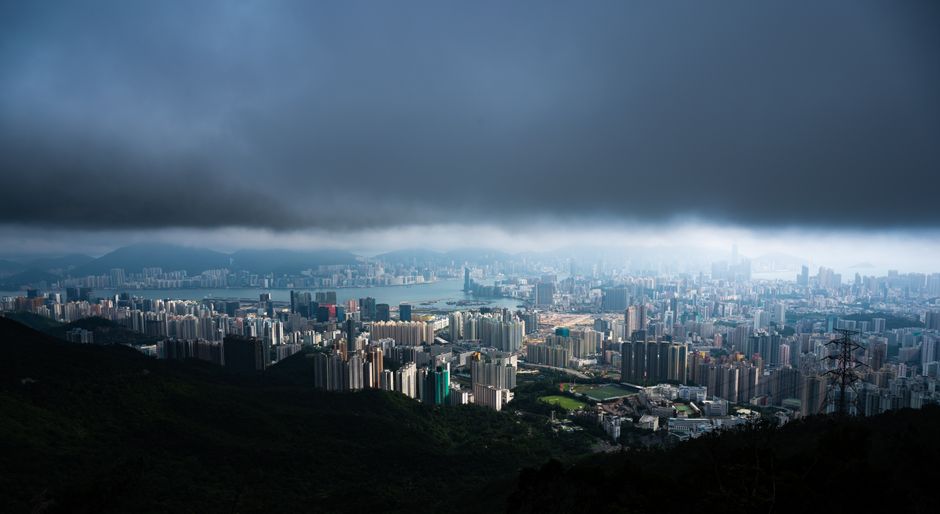
Dozens of Hong Kong residents say they have lost hundreds, in some cases thousands, of personal photographs after cloud storage platforms deployed updated duplicate-detection algorithms that flagged near-identical images — holiday snapshots, family portraits, school-day records — as redundant files and deleted or suppressed them without warning. The losses, reported across Kowloon, the New Territories and Hong Kong Island since late May 2026, have prompted community groups to call for clearer user-rights protections.
The timing matters. Hong Kong's digital storage habits shifted sharply after 2020, when emigration flows to the United Kingdom and Canada accelerated. Families separated across time zones increasingly relied on shared cloud albums as a primary link between relatives who had stayed and those who had left. For many households in Sham Shui Po and Tuen Mun — areas where multigenerational families are common and smartphone use among elderly residents is growing — the cloud album had become the de facto family archive. Losing it is not a technical inconvenience; it is a biographical rupture.
One resident, a retired schoolteacher living near Apliu Street in Sham Shui Po, described uploading roughly 4,000 photographs from her daughter's childhood only to find more than 600 had vanished from her shared album by June. She had taken multiple shots of the same scene — a habit many photographers share — and the platform's deduplication system treated the near-duplicates as waste data. The Consumer Council of Hong Kong received a cluster of similar complaints through its hotline in June, though the council has not yet published a formal case count. The Hong Kong Internet Society has separately flagged the issue to its membership.
How the algorithm works — and where it fails
Duplicate-image detection is not new technology. Platforms have used perceptual hashing — a process that converts image content into a fingerprint and compares fingerprints for similarity — for years, chiefly to remove illegal content at scale. What has changed is the aggression of the thresholds. Several major services updated their deduplication parameters in the first quarter of 2026, lowering the similarity score required before an image is flagged. A burst of six frames of a child blowing out birthday candles, each marginally different, can score above the new threshold and trigger deletion of all but one frame.
The City University of Hong Kong's School of Creative Media has published research noting that culturally specific photographic habits — including the Chinese practice of taking multiple nearly identical group portraits to ensure everyone's eyes are open — make Asian users disproportionately exposed to aggressive deduplication. The research, released in March 2026, estimated that users in East and Southeast Asia store on average 2.3 times as many near-duplicate images per album as users in North America or Western Europe, based on a sample of 1,200 anonymised accounts. Platforms designed around Western usage assumptions may therefore affect Hong Kong users at a higher rate.
What residents and organisations say should happen next
Advocacy group Digital Rights in Asia, which operates out of offices in Wan Chai, has written to the Office of the Privacy Commissioner for Personal Data urging it to clarify whether automated deletion of user-uploaded content triggers obligations under the Personal Data (Privacy) Ordinance. The ordinance, last substantively amended in 2021, requires data users to take reasonably practicable steps to ensure personal data is not kept longer than necessary — but it does not explicitly address platform-side deletion of data the user intended to keep.
For now, the most practical advice from Digital Rights in Asia and the Hong Kong Internet Society is the same: do not rely on a single cloud provider. Residents are encouraged to maintain local backups on physical drives — a 2TB external drive costs roughly HK$380 at electronics shops along Sham Shui Po's Apliu Street and Nam Cheong Street — and to audit cloud albums monthly rather than assuming uploaded files are permanent. Some platforms allow users to disable automatic duplicate removal in account settings; the relevant toggle is rarely prominent, but it exists. Families who have already lost images should submit formal complaints to their platform provider and retain case reference numbers, which may be needed if a compensation or data-restoration request is escalated.