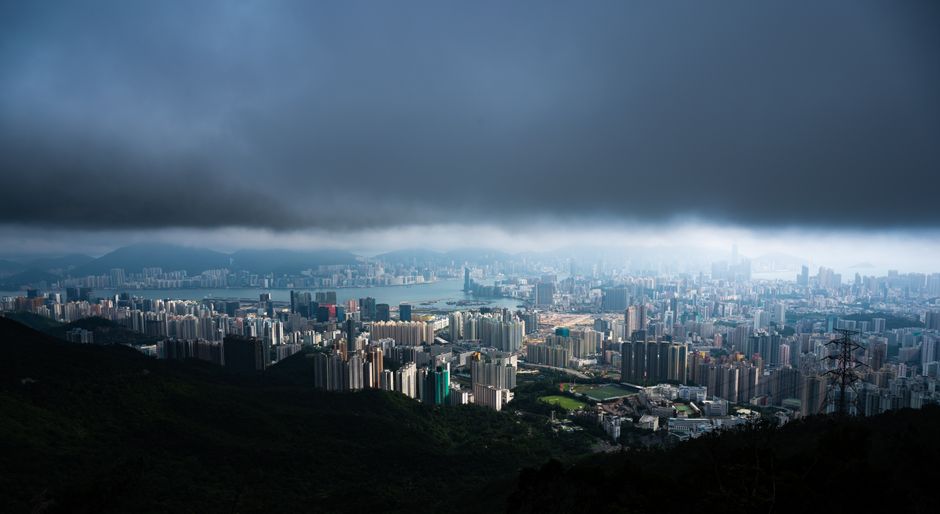
Dozens of Hong Kong residents say they have lost access to original photographs stored on local digital platforms after automated systems replaced their images with generic duplicates — a practice that community members describe as distressing, confusing, and, in several cases, commercially damaging.
The complaints centre on a function used by multiple cloud-based storage and content-management services operating in the city, in which an algorithm identifies images flagged as visually similar or redundant and substitutes them with a single consolidated version. Users say they were given little or no warning before the replacements occurred, and that appeals to restore originals have gone unanswered for weeks.
For many affected residents, the timing matters. Hong Kong's digital economy is under pressure to demonstrate competitiveness with Singapore, and a string of governance questions around data handling — heightened since the implementation of the National Security Law in 2020 and the subsequent Article 23 legislation — have made locals especially sensitive about who controls their data and how platforms handle it.
Street-level fallout in Sham Shui Po and Wan Chai
The impact has been felt acutely among small business owners. Print and photography retailers along Apliu Street in Sham Shui Po, a district long known for its electronics and media trade, reported that clients began showing up in early June 2026 asking for help recovering images that had disappeared from shared business accounts. Several said the replaced photographs were product shots used for promotional materials on local e-commerce pages — images that took hours to stage and shoot.
Creative freelancers in Wan Chai tell a similar story. A cluster of independent designers and photographers who share co-working space at Wanchai Tower on Harbour Road say the replacements have disrupted active client projects. One studio operator, who did not wish to be named, said a folder containing 340 original architectural photographs was reduced by the platform to fewer than 80 images, with the rest replaced by what appeared to be generic stock-style copies pulled from elsewhere in the system.
The Consumer Council of Hong Kong received a measurable uptick in complaints related to digital storage services during May and June 2026, though the Council has not yet published a breakdown by complaint type for that period. Separately, the Office of the Privacy Commissioner for Personal Data (PCPD) confirmed in a June 2026 public notice that it was aware of user concerns about automated data-handling practices and encouraged affected individuals to submit formal inquiries through its Enquiry Hotline at 2827 2827.
What residents want — and what they can do now
Community members who spoke to The Daily Hong Kong were consistent on two points: they want a plain-language explanation of how the duplicate-detection algorithm works, and they want a genuine restoration pathway for images replaced without consent.
Digital rights advocates connected to the Hong Kong Internet Society have begun compiling a registry of affected accounts. They advise users to download and locally back up all remaining images immediately, document the discrepancy with screenshots showing file counts before and after, and submit a formal complaint to the PCPD using Form OPS003, available on the Commissioner's website at pcpd.org.hk.
Legal advisers familiar with Hong Kong's Personal Data (Privacy) Ordinance, Cap. 486, note that the Ordinance's Data Protection Principle 4 requires data controllers to take practicable steps to protect personal data against unauthorised or accidental loss — a provision that affected users may be able to invoke if they can show the replacement was not authorised under any agreed terms of service.
The platforms at the centre of the complaints have not issued public statements. Affected users say their next step, if platform-level resolution fails, is a collective submission to the Legislative Council's Panel on Information Technology and Broadcasting, which next meets in late July 2026. For now, the residents of Sham Shui Po and Wan Chai are doing what Hong Kongers have long done in the face of institutional inertia: organising among themselves, sharing documentation in neighbourhood WhatsApp groups, and waiting to see whether regulators move faster than the algorithms did.