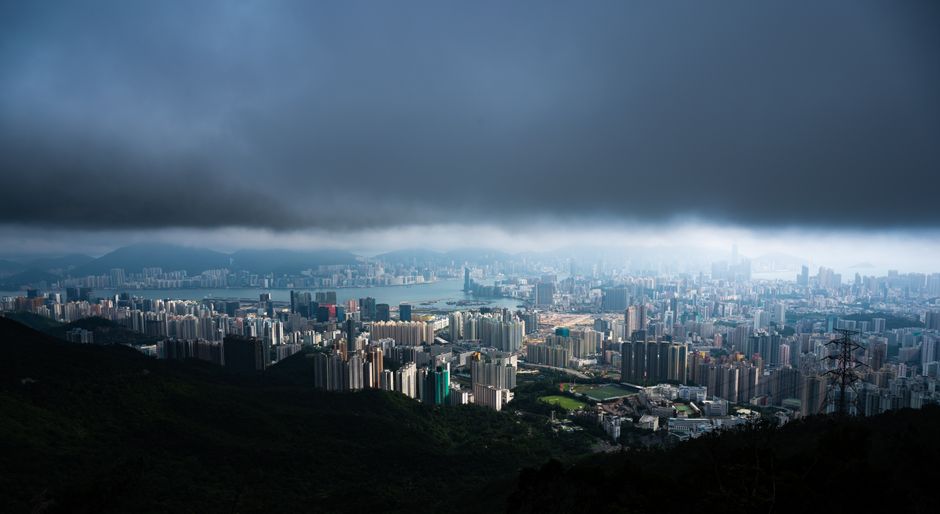
Hong Kong's creative and media industries are staring down a practical crisis that has quietly accumulated for years: thousands of duplicate and near-duplicate images circulating across institutional databases, news photo libraries, and the growing stock-image market that feeds the Greater Bay Area's commercial sector. The immediate question is no longer how the problem got this bad, but who decides the fix — and by when.
The pressure is sharpening because Hong Kong's Intellectual Property Department is understood to be reviewing its guidance framework for digital asset management ahead of a consultation window expected to open in the third quarter of 2026. At the same time, local newsrooms, advertising agencies clustered around Wan Chai and Causeway Bay, and the public-records arms of government bureaus have each been building their own patchwork solutions, producing incompatible systems that specialists say make the underlying duplication worse rather than better.
Why the Decisions Cannot Wait
Three forces are converging. First, the rollout of AI-assisted image generation across Hong Kong's advertising sector — particularly among agencies operating out of Cyberport in Pok Fu Lam — has dramatically increased the volume of visually similar assets entering circulation every week. Second, the city's push to deepen its role as a digital-content hub within the Greater Bay Area means that images tagged, filed, or licensed in Hong Kong increasingly flow into platforms and databases on the Mainland, where the duplication compounds. Third, institutions from the Hong Kong Public Libraries network to the Hong Kong Film Archive in Sai Wan Ho have each invested in separate cataloguing tools that do not speak to one another.
The Hong Kong Film Archive, which holds more than 1,800 film titles and a substantial collection of still photographs, has been working since at least 2023 on digital preservation standards. But photography professionals and picture editors who work with its collections say the absence of a shared deduplication protocol with other public institutions creates genuine confusion over which version of an archived image carries authoritative metadata. That confusion has real commercial consequences: a licensing dispute over a replicated stock photograph can stall an advertising campaign for weeks, a delay that agencies in Admiralty and Central have increasingly cited as a competitive disadvantage relative to Singapore.
The Decision Points Ahead
Three specific choices will define the next twelve months. The first is whether the Intellectual Property Department opts for a voluntary industry code or pushes for a statutory standard with teeth. A voluntary code has faster adoption prospects but limited enforcement; a statutory route requires Legislative Council time and could take until late 2027 to operationalise.
The second decision sits with the Hong Kong Trade Development Council, which runs the largest trade-facing image and media library supporting exporters and events like the April edition of the Hong Kong Electronics Fair. The HKTDC must decide whether to mandate perceptual-hash deduplication — a technical standard that flags visually near-identical images even when file names differ — across its supplier-facing portals, or leave the decision to individual exhibitors. The cost of implementing that standard across a library of the HKTDC's scale is not trivial; comparable rollouts in European trade bodies have run into six figures in euros for the software licensing alone.
The third decision is the most politically sensitive. Government bureaus across Hong Kong each manage their own photographic records. A centralised deduplication registry would require inter-bureau data sharing under a framework that lawyers say needs to be tested against the Personal Data (Privacy) Ordinance — specifically sections governing the use of biometric and identifiable visual data. That legal review could anchor the timeline for any whole-of-government solution well into 2027.
For photographers, picture editors, and archivists operating between Kennedy Town studios and the newsrooms on King's Road in Quarry Bay, the practical advice is to begin documenting their current workflows now. Any consultation process the government runs will weight submissions from industries that can demonstrate measurable harm from existing duplication. Building that paper trail before the consultation opens is the single most useful step available to the sector right now.