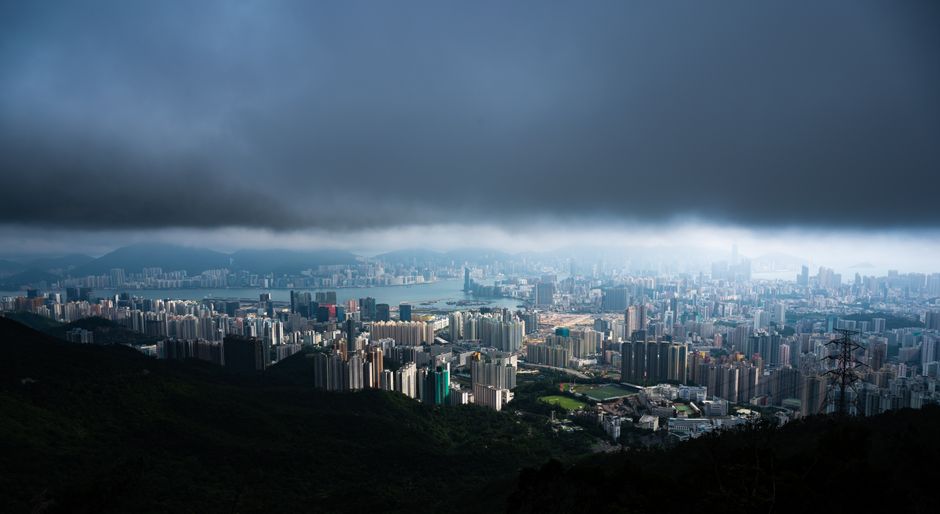
Hong Kong's digital economy has a growing image problem — literally. Duplicate images, ranging from recycled stock photography to AI-generated copies of original photojournalism, are proliferating across local e-commerce listings, news aggregators and social media at a pace that is straining both copyright enforcement and content moderation infrastructure. The Office of the Communications Authority received a measurable increase in digital content complaints during 2025, according to its annual figures, and intellectual property practitioners in Admiralty say image duplication cases now make up a significant share of their copyright caseloads.
The timing matters. Hong Kong's government has been pushing hard to position the city as a regional digital hub under the Greater Bay Area framework, and credibility on intellectual property protection is central to that pitch. Mainland e-commerce platforms, some operating warehouses in Kwai Chung and logistics corridors through Shenzhen, routinely pull product images from Hong Kong retail sites — sometimes without authorisation. Meanwhile, the rollout of Article 23 security legislation in March 2024 has already changed the media environment here, making some content creators and news organisations more cautious about pursuing aggressive enforcement that might draw scrutiny in other directions.
What Hong Kong Is Actually Doing
The Hong Kong Intellectual Property Department, based in Queensway Government Offices in Admiralty, operates a voluntary mediation scheme for image copyright disputes, but it has no power to compel takedowns from platforms incorporated outside the territory. The department launched a digital literacy campaign in September 2025 targeting small and medium enterprises in Mong Kok's garment wholesale district and the Ap Liu Street electronics market in Sham Shui Po — two areas where duplicate product imagery is endemic on third-party selling platforms. Uptake has been described in government budget documents as modest.
Hong Kong Polytechnic University's School of Design, based in Hung Hom, has been developing detection tools through a research program that uses perceptual hashing — a method that generates a digital fingerprint for each image — to flag duplicates across multiple platforms simultaneously. The technique is not new, but the PolyU team has adapted it for Cantonese-language e-commerce environments, where metadata conventions differ from English-language platforms. The research, which received a HK$2.8 million grant from the Innovation and Technology Fund in the 2024-25 cycle, is expected to produce a deployable toolkit by the end of 2026.
How Seoul and London Compare
The contrast with Seoul and London is instructive. South Korea's Korea Copyright Commission operates a centralised real-time monitoring system that issued more than 340,000 corrective notices to domestic platforms in 2024, according to figures the Commission published in its annual report. The system is backed by legislation that puts the burden of proof on platforms, not rights holders — a reversal of the model that governs Hong Kong's current framework, which requires the original creator to initiate action.
In London, the UK's Intellectual Property Office has been piloting an AI-assisted image registry since January 2025 in partnership with Getty Images and the National Union of Journalists, allowing rights holders to pre-register visual assets so that duplication triggers an automated alert rather than a retrospective complaint. No equivalent scheme exists in Hong Kong, and the city's digital rights organisations — including the Hong Kong Journalists Association and the Hong Kong Design Institute's alumni network — have been pushing publicly for a comparable system since late 2024.
Singapore, Hong Kong's most direct competitor for regional financial and creative industry talent, amended its Copyright Act in 2021 to include specific provisions for online intermediary liability, giving rights holders a faster route to platform-level enforcement. Hong Kong's equivalent framework has not been updated in the same period.
For local photographers, designers and small retailers in areas like Sheung Wan's creative cluster along Possession Street, the practical advice from IP lawyers is consistent: watermark originals before uploading, register works with the Hong Kong Copyright Licensing Association, and document the date of first publication carefully. The PolyU detection toolkit, once available, will offer a more automated option — but businesses that need protection now will have to work within a system that is still catching up to the scale of the problem.