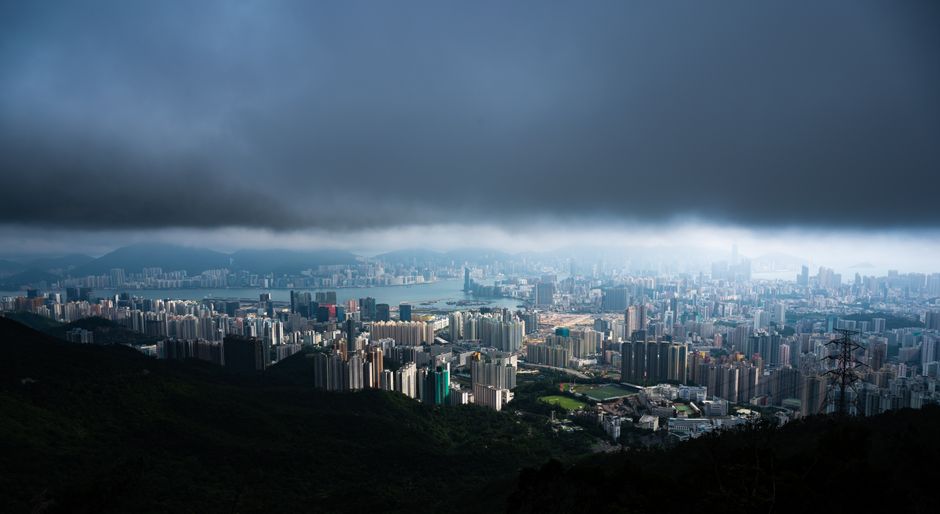
Hong Kong flat hunters already face some of the steepest asking prices on the planet. Now a quieter frustration is compounding the ordeal: duplicate and recycled property photographs plastered across listings on major portals, leaving prospective buyers and renters unable to trust what they are actually viewing before showing up in person.
The problem has intensified as Hong Kong's property market stabilises after a prolonged correction. With transaction volumes ticking upward again in the second quarter of 2026 and mortgage rates easing slightly following adjustments by major lenders including HSBC Hong Kong, more residents are trawling platforms such as Centaline Property, Midland Realty and 28Hse in search of units. What they are encountering with increasing regularity are photo sets that appear across multiple, unrelated listings — sometimes images from entirely different buildings reproduced to pad out sparse entries.
Why Repeated Photographs Create Real Harm
The stakes are not trivial. The average price per square foot for a residential unit in Kowloon City hovered around HK$12,000 to HK$14,000 through mid-2026, according to general market tracking by Centaline's Centa-City Leading Index. A buyer who travels from Tsuen Wan to inspect a flat in To Kwa Wan, only to find that the luminous kitchen in the listing photographs belongs to a different property entirely, has lost an afternoon and potentially made a misguided offer. Estate agents working out of branches in Jordan Road and in the Cityplaza complex in Taikoo Shing have informally acknowledged that client complaints about misleading imagery have grown more frequent, though no regulator has yet published a formal tally.
The issue connects directly to how listings are compiled. When a new unit comes to market quickly — sometimes within days of a previous tenant vacating — agents occasionally pull photographs from a similar unit in the same block rather than arranging a fresh shoot. The result is technically accurate in layout but deceptive in condition, finish and natural light. A 400-square-foot studio in Sham Shui Po photographed with wide-angle lenses from a brighter, higher-floor unit in the same building presents as a significantly more attractive proposition than it is.
For Hong Kong's large community of prospective buyers who emigrated to the United Kingdom or Canada and are now weighing a return, the photographs are often the primary — sometimes only — evidence they examine before making remote enquiries or even remote offers. That cohort has grown meaningfully since 2020, and many rely entirely on digital listings when assessing whether to re-enter the local market from abroad.
What Agents and Platforms Are Expected to Do
The Estate Agents Authority, which licenses practitioners under the Estate Agents Ordinance (Cap. 511), already prohibits misrepresentation in property transactions. Whether duplicate imagery constitutes a formal breach under existing guidance is a question the authority has not yet publicly addressed in a dedicated circular. The Consumer Council has fielded general complaints about property advertising standards, but its most recent published report on estate agency practices predates the current wave of all-digital listing dominance.
Practical pressure may ultimately come from the platforms themselves. Portals that rely on user engagement have financial incentives to improve listing quality; a search result that frustrates users pushes them toward competitors. Image-recognition technology capable of flagging duplicate photographs across thousands of listings exists and is already deployed by major real estate platforms in markets including the United States and the United Kingdom. Deploying equivalent tools in Hong Kong is technically straightforward.
For residents navigating the market right now, the most reliable defence remains requesting a video walkthrough or a live virtual tour before committing to a physical viewing. Asking an agent to confirm the photograph date and specify whether images were taken in the listed unit — not a neighbouring one — is a reasonable and increasingly necessary step. In a city where a 50-square-foot difference can translate to hundreds of thousands of Hong Kong dollars, a duplicate image is not a minor inconvenience. It is a material fact.