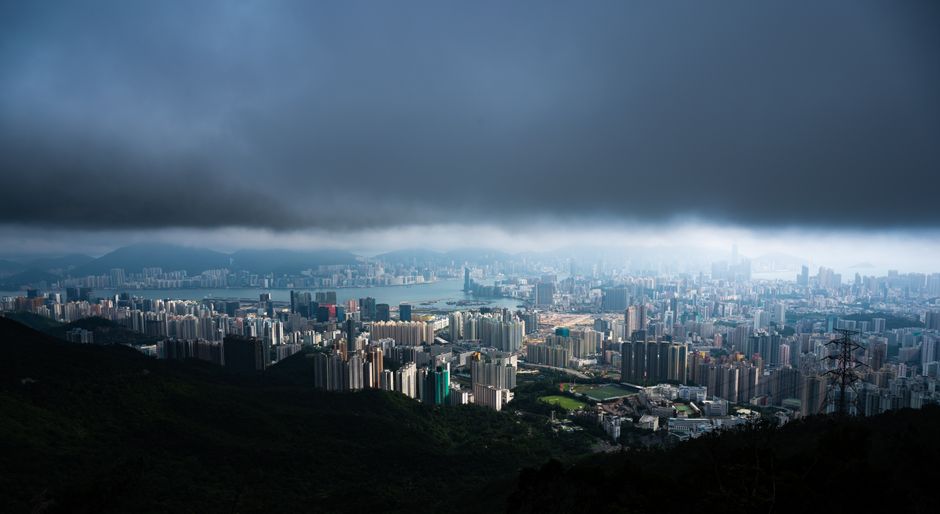
Hong Kong's largest public and commercial content libraries are sitting on a problem that has quietly compounded for years. Duplicate images — identical or near-identical photographs filed under different metadata, purchased multiple times from competing stock agencies, or scraped and re-uploaded across internal content management systems — now account for a measurable share of digital storage costs at institutions ranging from the Hong Kong Public Libraries network under the Leisure and Cultural Services Department to newsrooms along Wanchai's Glass Tower corridor.
The issue has reached a tipping point. Storage costs on enterprise cloud infrastructure in Hong Kong ran at roughly HK$0.08 to HK$0.12 per gigabyte per month for standard-tier services as of the first quarter of 2026, according to pricing benchmarks published by major providers operating in the city. When libraries of editorial photography run into the tens of millions of files, the redundancy tax is no longer trivial. The more consequential pressure, however, is legal and reputational: duplicate images acquired under different licences carry contradictory usage rights, and publishing the wrong version of a photograph can trigger copyright liability under Hong Kong's Copyright Ordinance, Cap. 528.
Why the Moment Is Now
Three forces have converged to make this a live editorial and institutional policy question in mid-2026. First, generative AI tools have dramatically accelerated image production, meaning that near-duplicate synthetic visuals are being ingested alongside original photography at a rate no manual editorial workflow can track. Second, several Hong Kong media companies that shed staff during the post-2020 contraction of the local press have inherited legacy archives with minimal documentation. Third, the Hong Kong Arts Development Council launched a digital asset governance review in early 2026 that explicitly flags duplicate content as a category requiring a defined management protocol before the review concludes later this year.
The practical consequences show up in specific places. At Cyberport in Pok Fu Lam, at least two resident media-tech startups have built perceptual hashing tools — software that converts images into compact fingerprints and flags matches — specifically to sell into Hong Kong's broadcaster and publisher market. The Hong Kong Trade Development Council's digital content unit, based at the Convention and Exhibition Centre in Wan Chai, has been piloting one such system since March 2026 to clean up its promotional image bank ahead of a major rebranding cycle tied to the Greater Bay Area promotion calendar.
The Key Decisions Ahead
Organisations now face a short list of high-stakes choices. The first is whether to purge duplicates aggressively or to archive them in cold storage. Purging reduces ongoing cost immediately but destroys provenance trails that may matter in future rights disputes. Cold-tier archiving at facilities such as those operated out of Tseung Kwan O's data centre cluster costs a fraction of active storage but requires a retrieval workflow that most editorial teams lack the staffing to manage.
The second decision is procurement reform. Rights-managed and royalty-free images bought through multiple agencies — Getty Images, Shutterstock, and regional suppliers operating under Hong Kong entity agreements — often land in the same archive without cross-referencing. Organisations that do not establish a single point-of-entry system before their next contract renewal cycle will simply rebuild the duplicate problem from scratch within 18 months.
The third and most consequential decision is governance: who owns the deduplication mandate inside an organisation. Without a named internal owner — a digital asset manager, a head of content operations, or an equivalent role — technology solutions tend to stall at pilot stage. The Hong Kong Journalists Association has noted the sector-wide shortage of staff with both editorial and technical competencies, a gap that emigration since 2020 has made structurally harder to close.
Organisations that move decisively before the fourth quarter of 2026 will be better positioned as the HKSAR government's own digital infrastructure review, expected to produce recommendations by December, sets new benchmarks for public-sector content management. Those that wait will find the cost of remediation — in storage bills, legal exposure, and lost staff time — has compounded further still.