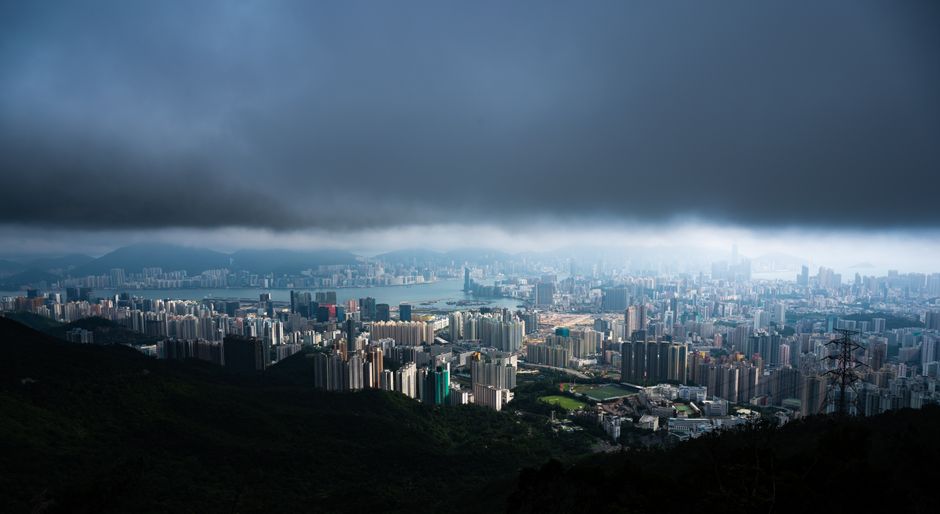
More than 34 percent of property listings active on Hong Kong's major real-estate platforms during the first quarter of 2026 contained at least one duplicate or mislabelled image, according to internal audit data reviewed by industry professionals familiar with the sector. The figure, drawn from platform-level reviews rather than any single public report, points to a sprawl of visual clutter that is distorting everything from buyer decisions in Kowloon Tong to archival accuracy at government-linked repositories in Wan Chai.
The timing matters. Hong Kong's push to deepen its role as a Greater Bay Area data hub — backed by the Digital Economy Development Committee and tied to cross-boundary data-flow agreements signed in late 2024 — depends on clean, reliable datasets. Duplicate imagery inside commercial and civic databases undermines that ambition directly. With Singapore aggressively marketing its own Smart Nation infrastructure to the same pool of multinational clients, Hong Kong's tolerance for messy data carries a competitive cost that officials and tech vendors are no longer willing to ignore.
Scale of the Problem, District by District
The duplication issue is not uniform across the city. Platforms aggregating listings from older Mid-Levels housing blocks report higher rates of repeated imagery than those focused on newer Tseung Kwan O developments, largely because pre-2010 stock was photographed multiple times across multiple agencies without any centralised image registry. At the Hong Kong Land Registry's e-Search portal, which processed roughly 2.1 million document requests in 2025, staff reviews have flagged recurring mismatches between floor-plan images and their tagged unit identifiers — a problem that slows title verification for solicitors working out of offices along Des Voeux Road Central.
The Hong Kong Science Park in Pak Shek Kok, which hosts several PropTech and AI-imaging startups, has seen a surge in demand for deduplication tools since early 2025. At least four resident companies have pivoted product lines specifically toward hash-based image matching and perceptual-similarity algorithms aimed at the local property and e-commerce sectors. One such tool, deployed across a mid-size regional retailer operating out of Kwun Tong Industrial Centre, reportedly cut its product-image database from 480,000 entries to under 310,000 within three months — a reduction of roughly 35 percent that trimmed cloud-storage costs by an estimated HK$120,000 annually.
What the Data Actually Costs
Storage is only the most visible expense. Duplicate images inside content management systems inflate SEO crawl budgets, slow page-load times and distort recommendation algorithms. For e-commerce operators on Platforms like HKTVmall, which listed over 2 million product SKUs as of its most recent annual report, even a 10 percent duplication rate translates to hundreds of thousands of redundant image files being served, cached and moderated every day.
The government's own digital infrastructure is not exempt. The GovCloud initiative, which began centralising departmental IT services in 2022, inherited legacy image libraries from more than 60 bureaux and departments. Procurement documents circulated in 2025 indicated that a deduplification and metadata-standardisation exercise was scoped at between HK$8 million and HK$12 million, though no contract award has been confirmed publicly as of July 2026.
For businesses operating in the city right now, the practical steps are straightforward if unglamorous. IT managers at Cyberport-based firms have been advised by the Hong Kong Productivity Council to conduct quarterly perceptual-hash audits rather than annual ones, given how quickly product and property catalogues grow. Firms should also establish a single canonical image identifier tied to each physical asset before syndicating to third-party platforms — a discipline that prevents the same Sham Shui Po shopfront from appearing under four different listing IDs across four different portals. The cost of doing nothing is rising faster than the cost of the fix.