Wellness
Mindfulness in Schools: What Local Programs Are Available
From Kowloon classrooms to Hong Kong Island campuses, a quiet movement is bringing structured meditation into the school day — and the evidence for it is growing.
4 min read
Wellness
From Kowloon classrooms to Hong Kong Island campuses, a quiet movement is bringing structured meditation into the school day — and the evidence for it is growing.
4 min read
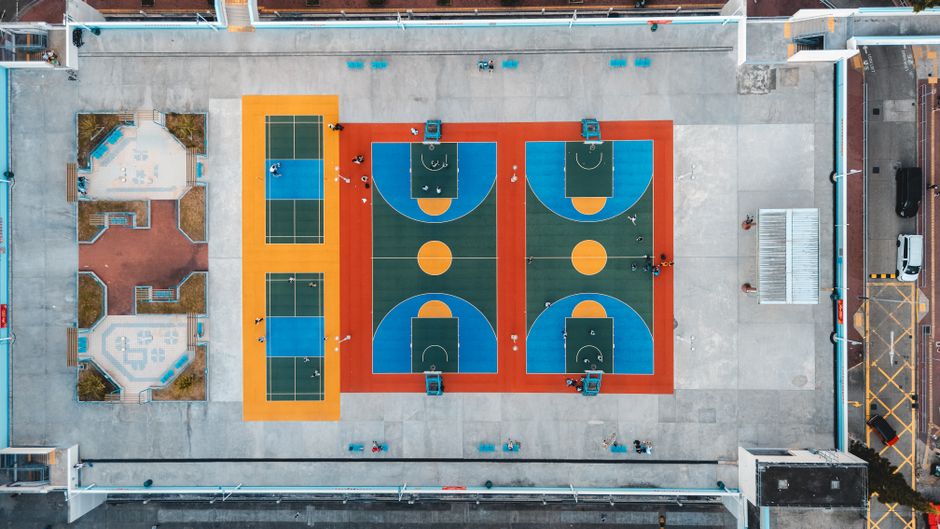
At least a dozen Hong Kong primary and secondary schools have introduced structured mindfulness programs over the past three academic years, according to figures compiled by the Hong Kong Council of Social Service. The practice — once confined to Buddhist study halls and the early-morning tai chi circles of Victoria Park — has moved firmly into the timetable.
The timing is not accidental. Post-pandemic anxiety rates among local students remain elevated. A 2024 survey by the University of Hong Kong's Faculty of Social Sciences found that 38 percent of secondary school students in the SAR reported persistent stress symptoms affecting sleep and concentration. School counsellors, already stretched thin, have been pushing administrators to supplement one-on-one support with classroom-level interventions. Mindfulness has become the most widely adopted tool.
The most established provider operating inside Hong Kong schools is Mind HK, the mental health charity headquartered in Wan Chai. Since 2022, Mind HK has delivered its schools-facing curriculum — an eight-week adaptation of the evidence-based Mindfulness-Based Stress Reduction framework — to students at more than 20 partner schools, including institutions in Tuen Mun, Sham Shui Po, and on the southern side of Hong Kong Island. Sessions run for roughly 40 minutes and are delivered by trained facilitators, not classroom teachers, which Mind HK argues protects the boundary between pastoral care and academic assessment.
A second major player is the Centre for Mindfulness in Education, which operates out of the Chinese University of Hong Kong's Shatin campus. The centre trains teachers directly, certifying them in a condensed six-day residential program held twice yearly, most recently in March 2026. The cost for teacher participants is HK$4,800, subsidised for schools that sign a two-year partnership agreement. CUHK's centre draws on research from institutions in the UK and Singapore, adapting exercises for Cantonese-speaking classrooms — a non-trivial task, given that the vocabulary around emotional regulation does not always translate directly.
Independent schools have moved faster. Hong Kong International School in Repulse Bay and German Swiss International School in Jardine's Lookout both incorporated mindfulness electives into their pastoral programmes before 2023. Several ESF schools across Kowloon have followed, embedding five-minute breathing exercises into morning registration at the secondary level.
The evidence base for school mindfulness programs is solid, if sometimes oversold by advocates. A 2023 meta-analysis published in the journal School Mental Health, covering 61 randomised controlled trials across 14 countries, found that school-based mindfulness programs produced a statistically significant reduction in anxiety and improved attention scores in students aged 10 to 17 — but the effects were modest and depended heavily on program fidelity. Programs delivered by trained external facilitators consistently outperformed those bolted on to an already-crowded teacher's responsibilities.
That distinction matters locally. The Education Bureau has not yet issued formal guidance on mindfulness as a curriculum component, meaning schools are largely self-directing. Some are purchasing off-the-shelf digital tools — apps such as Headspace for Schools, which runs at approximately US$3 per student annually — without the live facilitation that appears to drive better outcomes.
Parents and students wanting to explore this independently have options outside school hours. The Hong Kong Shambhala Meditation Centre in Wan Chai runs beginner-friendly group sessions on Saturday mornings for HK$150 per session. The Peak Trail and Dragon's Back route in Shek O are increasingly recommended by school counsellors as complementary to formal practice — structured walking in green space produces measurable cortisol reductions, even without guided instruction.
For families considering a more formal introduction, Mind HK's website lists its current school partners and offers a community referral pathway for students whose schools are not yet in the program. The Department of Health's Student Health Service, with clinics in Kowloon City and across the New Territories, can also connect families to psychological support that incorporates mindfulness techniques. As always, any student experiencing significant mental health difficulties should be assessed by a qualified professional before any school program is treated as a primary intervention.
Wellness
Wellness
Wellness
Wellness
About this article
Published by The Daily Hong Kong
Spread the word
Daily brief
Free, in your inbox before 7am. Weekdays.
Before you go
The day's Hong Kong news in a 2-minute read. Free, weekday mornings.