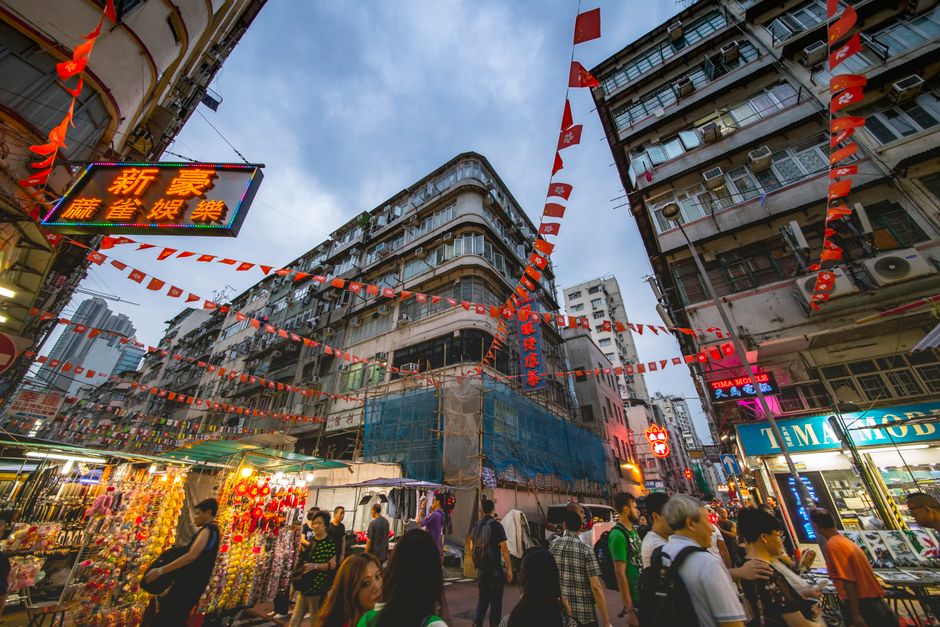
Walk through Central's narrow laneways on a Saturday afternoon and you'll encounter a Hong Kong that feels increasingly at odds with the gleaming financial district towers surrounding it. Heritage buildings—once slated for demolition or conversion into luxury retail—are being claimed by artists, makers, and cultural organisers who see in their weathered facades something more valuable than development potential: a tangible connection to the city's layered identity.
This phenomenon extends far beyond sentimentality. Spaces like those emerging in Sham Shui Po, traditionally dismissed as working-class and unglamorous, have become epicentres of Hong Kong's contemporary art scene. The neighbourhood's pre-war tenement buildings, many constructed between the 1950s and 1970s, now house independent galleries, ceramic studios, and design collectives. What was once considered urban decay has become cultural currency.
The transformation reflects a broader reckoning. Hong Kong's rapid 7.3% GDP growth over the past decade came largely from financial services and property development—sectors that prioritise efficiency over memory. Yet parallel to this trajectory, younger generations of Hong Kong creators have begun excavating the city's architectural and cultural layers, using heritage as both anchor and artistic material.
Organisations like the Hong Kong Heritage Conservation Foundation report increasing applications for adaptive reuse projects, a stark reversal from the demolition-first mentality of the 1990s and 2000s. The Cattle Depot Artist Village in To Kwa Wan—a former slaughterhouse converted into studio and exhibition space in 2000—now attracts thousands of visitors monthly and hosts over 80 resident artists. Similar initiatives in Kennedy Town and Wong Chuk Hang have transformed post-industrial waterfront areas into creative districts.
This isn't merely aesthetic nostalgia. For a city whose identity has been perpetually contested—between East and West, tradition and modernity, global finance hub and local community—heritage preservation has become a way of asserting creative agency. By choosing which buildings to save and how to activate them, Hong Kong's cultural workers are essentially authoring their own narrative about what the city means.
The economics matter too. A studio space in a heritage building in Sham Shui Po rents for around HK$8,000-12,000 monthly—a fraction of Central's HK$50,000+. This affordability is enabling a generation of artists, designers, and cultural entrepreneurs who might otherwise be priced out entirely.
As global cities increasingly homogenise, Hong Kong's scrappy, inventive approach to heritage-making offers something rare: a model where preservation serves not conservation alone, but creative reinvention. The question is whether the city can sustain this momentum without commodifying the very authenticity that makes it valuable.
This article was compiled by AI from the sources linked above and screened before publishing. See our editorial standards.