Wellness
A Beginner's Guide to Starting a Meditation Practice in Hong Kong
From Kowloon Park to quiet MTR corners, here's how to build a mindfulness habit that actually sticks in one of the world's most wired cities.
4 min read
Updated 2 h ago
Wellness
From Kowloon Park to quiet MTR corners, here's how to build a mindfulness habit that actually sticks in one of the world's most wired cities.
4 min read
Updated 2 h ago
More Hong Kong residents are turning to meditation than at any point in the past decade, and the numbers back it up. A 2025 survey by the Chinese University of Hong Kong's Department of Psychiatry found that 38 percent of adults in the city reported trying some form of mindfulness practice in the previous 12 months, up from 22 percent in 2019. The surge tracks global interest, but in a city where the average commute runs 47 minutes each way and office hours routinely spill past 9 p.m., the draw is distinctly local.
Global heat records and relentless news cycles have pushed stress indicators higher across urban Asia. Hong Kong's Department of Health reported a 14 percent rise in stress-related consultations at its Integrated Mental Health Programme clinics during the first half of 2026. Practitioners and community health workers say the city's residents are actively looking for tools that don't require a prescription or a flight to Bali.
The good news for total beginners is that Hong Kong's public infrastructure is quietly excellent for meditation. Kowloon Park, sitting between Nathan Road and Austin Road in Tsim Sha Tsui, fills every morning before 7:30 a.m. with tai chi practitioners whose slow, structured movement is — functionally — moving meditation. Showing up and mirroring what you see costs nothing and provides an immediate entry point into breath-centred focus.
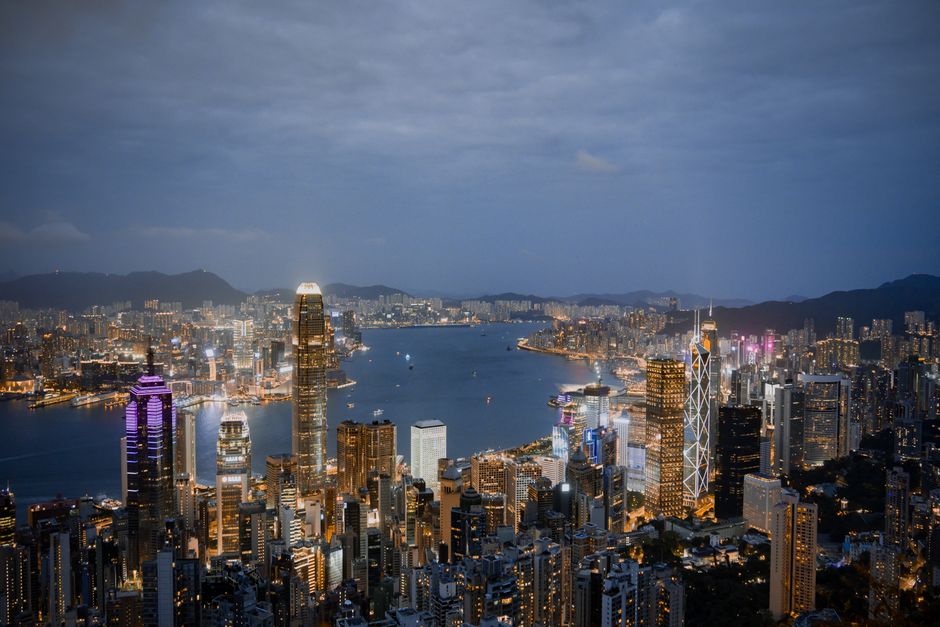
Victoria Peak Garden, a short walk from the Peak Tram upper terminus, offers a terraced space that stays relatively quiet on weekday mornings. Several practitioners who use it regularly describe sitting for 10 to 20 minutes facing the city below as a reliable reset. The contrast — dense urban sprawl viewed from deliberate stillness — seems to sharpen attention in a way a bare white room cannot.
For those wanting structured instruction, the Hong Kong Buddhist Association runs beginner meditation sessions at its Nathan Road centre in Mong Kok, with drop-in classes starting at HK$80. The YMCA of Hong Kong's Bridges Street facility in Sheung Wan offers an eight-week Mindfulness-Based Stress Reduction course modelled on the Jon Kabat-Zinn protocol developed at the University of Massachusetts; the current cohort, which began in June 2026, charges HK$2,800 for the full programme. Both organisations have English and Cantonese instruction available.
Apps fill the gap for people not ready to walk into a room. Insight Timer remains free for its core library of more than 200,000 guided meditations, and its Hong Kong user group — searchable within the app — has over 4,000 members who share local session times and park meetup spots.
Research consistently shows that consistency matters far more than duration. A meta-analysis published in JAMA Internal Medicine found that even eight minutes of daily practice produced measurable reductions in anxiety scores after four weeks. That is worth holding onto when the temptation is to wait until you can carve out 30 uninterrupted minutes — a luxury that rarely arrives on a Hong Kong Tuesday.
The practical architecture for a beginner looks like this: pick one fixed trigger, something that already happens daily, and attach five minutes of breath-focused attention to it. The final station on the MTR before your stop. The three minutes before a lunch order arrives. The moment the air-conditioning in your Wan Chai office clicks off at midnight. The location is secondary. The repetition is everything.
Posture matters less than most guides suggest. Sitting upright on a chair with feet flat on the floor is functionally equivalent to a cross-legged floor position for beginners. The single non-negotiable is that the spine is reasonably extended and not collapsed, which keeps the breath full.
The MacLehose Trail and Dragon's Back provide weekend options for those who prefer movement to stillness — walking meditation along a defined path, with attention fixed on footfall and breath rather than destination, is a legitimate practice with deep roots in Buddhist tradition. The Dragon's Back trailhead at Shek O Road on Hong Kong Island takes about 25 minutes by bus 9 from Shau Kei Wan MTR, and the first kilometre alone is worth the trip.
For personal health concerns or clinical-level anxiety, the Department of Health's 24-hour mental health hotline — 2382 0000 — connects callers to trained counsellors. Meditation is a complement, not a substitute, for professional care.
Wellness
Wellness
Wellness
Wellness
About this article
Published by The Daily Hong Kong
Spread the word
Daily brief
Free, in your inbox before 7am. Weekdays.
Before you go
The day's Hong Kong news in a 2-minute read. Free, weekday mornings.