Hong Kong's office market is flashing a complex picture that defies simple interpretation. While headline vacancy rates in Central's prime office towers hover around 8-9%—historically elevated for the world's most expensive real estate market—the underlying investment flows reveal a more nuanced story about how capital is repositioning itself in 2026.
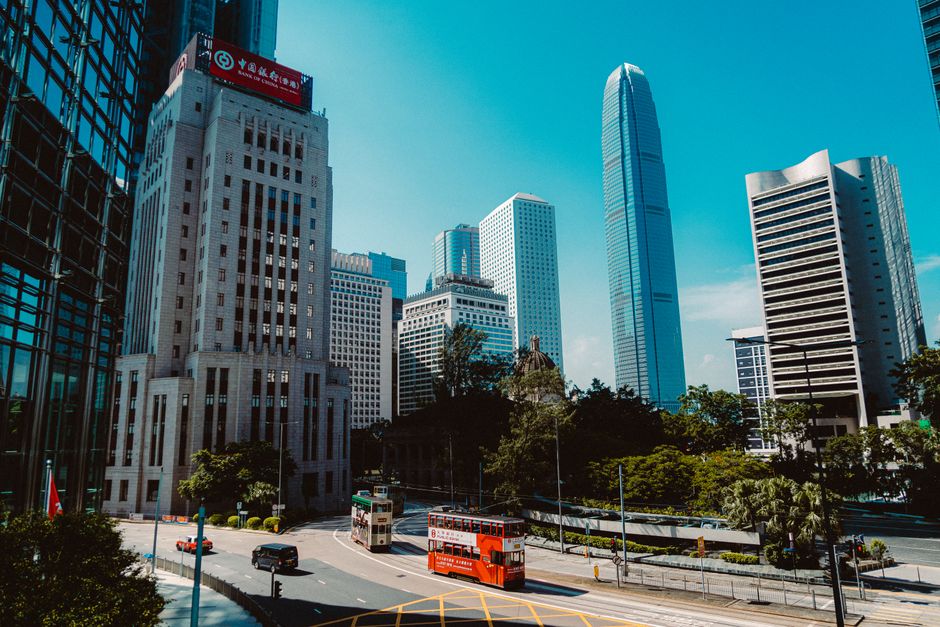
The challenge lies in understanding what these economic indicators actually signal. Over the past 18 months, institutional investors have rotated away from trophy addresses along Des Voeux Road Central and Statue Square, where rental growth has stalled near HK$130-150 per square foot annually. Yet this retreat masks a quiet reshuffling into secondary and tertiary office clusters across the Mid-Levels, Wong Chuk Hang, and increasingly, Kowloon East precincts like Kowloonbay and Quarry Bay.
Real estate consultancies tracking capital deployment patterns note that cross-border investment into Hong Kong office assets fell roughly 23% year-on-year through the first half of 2026, according to market monitors. However, domestic institutional capital—particularly from insurance funds and pension schemes—has countered this decline, suggesting a recalibration rather than wholesale abandonment of the sector.
The micro-economics tell the story. Grade-A offices in Central command rents around HK$145-165 per square foot, while Grade-B properties in Mid-Levels trade at HK$85-105. This 40-50% discount has triggered selective demand from technology firms, professional services boutiques, and regional headquarters operations seeking operational efficiency without sacrificing prestige or connectivity.
What's shifting the investment calculus? Several factors matter. First, hybrid work adoption has normalised across multinational corporations, reducing per-employee space requirements and extending decision timelines on lease renewals. Second, interest rate expectations have compressed capital values; buildings trading at 4-5% yields in 2023 now command buyer interest at 5.5-6.5% yields, rebalancing risk-return profiles.
Most tellingly, investment flows reveal where sophisticated money believes growth lies. Private equity firms and family offices have increasingly targeted conversion opportunities—retrofitting older office stock in Sheung Wan and Sai Ying Pun into mixed-use residential-commercial hybrids. This signals confidence that Hong Kong's office footprint will contract, but premium, adaptable space will retain value.
The takeaway: vacancy rates alone miss the story. Economic indicators suggest not collapse but recalibration—a market where capital allocation is becoming more selective, geographically dispersed, and yield-focused than the uniform demand that once characterised Hong Kong's office sector.
This article was compiled by AI from the sources linked above and screened before publishing. See our editorial standards.