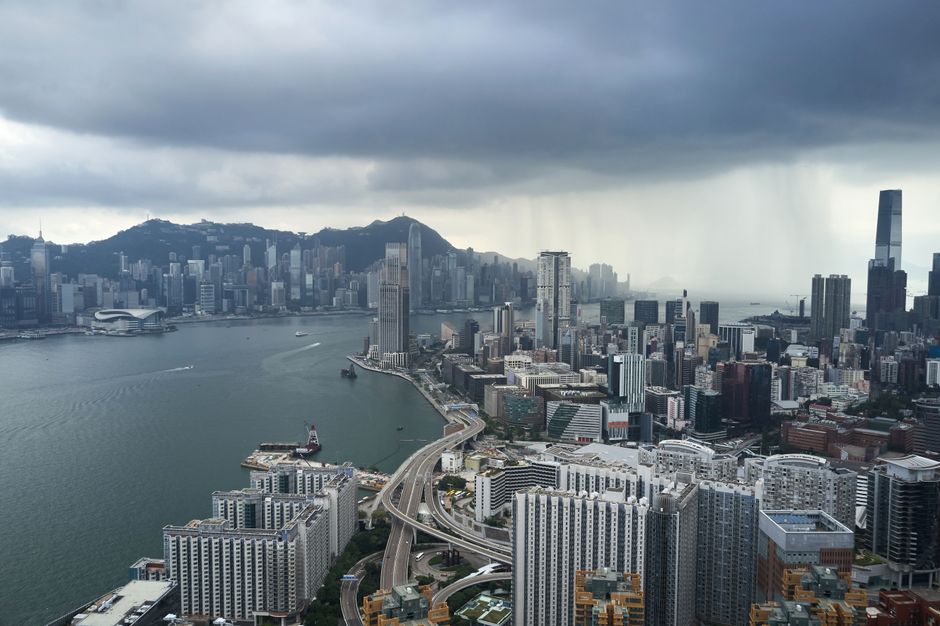
For decades, Central's gleaming towers have symbolised Hong Kong's financial dominance. Today, that dominance is spreading outward—and the implications for the city's labour market are profound.
Office space in Central now commands rents exceeding HK$100 per square foot annually, pricing out mid-sized firms and forcing established companies to recalculate their real estate strategies. Data from Cushman & Wakefield shows that Grade A office vacancy in Central has tightened to 2.3 per cent, the lowest in five years, while rents in emerging secondary business districts like Quarry Bay and Kowloon Bay have grown 18 per cent year-on-year. The shift is no longer aspirational—it is structural.
Kowloon Bay's transformation offers a case study. Once a light industrial backwater, the district now hosts tech firms, professional services outfits, and creative agencies capitalising on lower occupancy costs and easier access via the MTR. A 10,000-square-foot office on Hoi Bun Road costs roughly 40 per cent less than comparable Central space, savings that are compelling to companies rebuilding post-pandemic.
But economics alone do not explain the full picture. This migration is reshaping recruitment in unexpected ways. Companies moving to outlying areas report stronger retention among younger employees living in New Territories dormitory towns and Kowloon Tong residential clusters, where commute times have shrunk dramatically. Conversely, Central-based firms are finding talent pools contracting as workers resist hour-long commutes from the New Territories, bidding up salaries in a tight market.
The Human Resources Council of Hong Kong notes that geographic decentralisation is fragmenting the city's once-unified talent marketplace. Specialised roles in technology, engineering, and design are clustering around Cyberport in Pok Fu Lam and the Science Park in Sha Tin, creating micro-labour markets where local expertise commands premium rates. Meanwhile, traditional finance and law remain anchored in Central and Admiralty, but with higher staff turnover.
Property consultants warn this trend may persist. With remote work normalising across the region, companies are increasingly willing to trade prestige addresses for operational efficiency. Real estate services firms project that office stock in secondary districts will absorb an additional 2 million square feet of demand over the next three years.
The implications extend beyond commute patterns. As economic activity disperses geographically, so too does opportunity. Young professionals no longer need to relocate to Central to build careers—a shift that could reshape Hong Kong's housing demand, public transport priorities, and ultimately, its competitive advantage in retaining regional talent.
This article was compiled by AI from the sources linked above and screened before publishing. See our editorial standards.