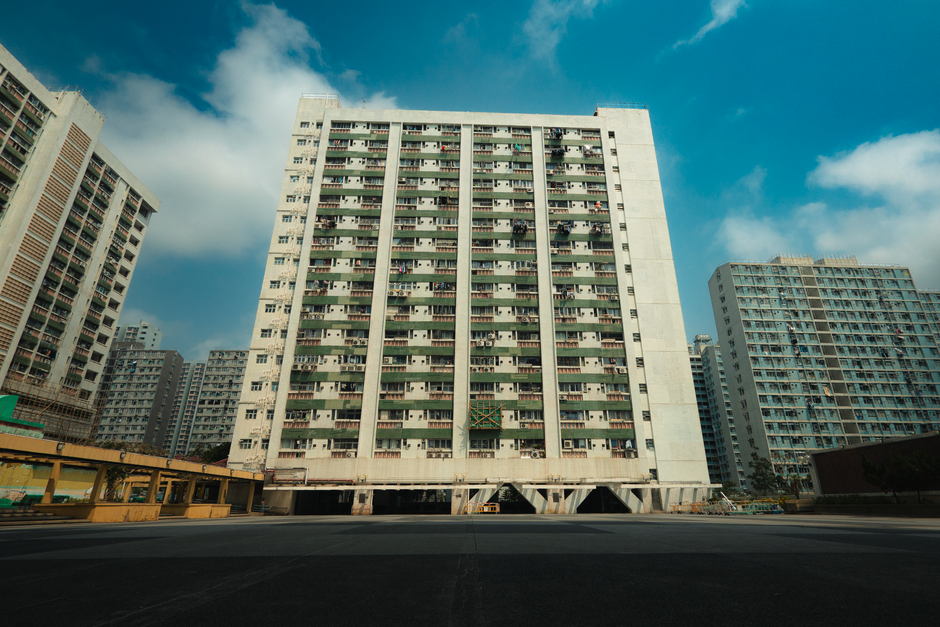
Hong Kong's residential rental yields have slid to their lowest sustained level in years, and the arithmetic is now stark: a buyer purchasing a 500-square-foot flat in Kowloon for HK$8.5 million can expect to collect roughly HK$18,000 a month in rent — a gross yield of just 2.5 percent annually, before management fees, rates and vacancy periods eat into the return.
That figure matters because the Hong Kong Interbank Offered Rate remains elevated against where it sat before 2022, meaning landlords who financed their purchases are in many cases running negative carry. A buyer who put down the minimum 40 percent on that same Kowloon flat and borrowed the rest at a current mortgage rate of around 3.5 percent is paying more in interest each month than the tenant is handing over in rent. The renter, in effect, is getting the better deal.
What the Numbers Actually Show
The Rating and Valuation Department's most recent quarterly data placed the average transaction price for Class B units — flats between 430 and 752 square feet, the bread-and-butter of Hong Kong's market — at HK$8.2 million citywide as of the first quarter of 2026. In traditional investor strongholds such as Tuen Mun and Yuen Long in the New Territories, where prices are softer, yields edge up to around 3 percent. But in the districts where most capital congregates — Kowloon City, Ho Man Tin, and the Mid-Levels corridor above Hollywood Road — gross yields compress toward 2.3 to 2.6 percent.
Strip out costs and the net yield picture is grimmer. Government rates, typically 5 percent of assessed rental value, plus building management charges that can run HK$2,000 to HK$4,000 a month in newer estates, pull effective returns below 2 percent for many landlords in Kowloon and on Hong Kong Island. Centaline Property Agency's Centa-City Leading Index has shown prices broadly flat through the first half of 2026, offering no capital growth to compensate for the thin income stream.
For comparison, London prime residential yields currently sit closer to 3.5 to 4 percent, and Tokyo's central wards — long considered another low-yield market — still deliver around 3.2 percent gross on smaller units. Hong Kong stands out globally for how little income investors extract relative to purchase price.
Where Landlords Are Still Finding Value
Not every postcode tells the same story. Older walkup buildings along Sai Yeung Choi Street South in Mong Kok, where asking prices for 300-square-foot units can drop to HK$4.5 million, generate rents of HK$12,000 to HK$14,000 a month — pushing gross yields closer to 3.5 percent. The trade-off is building age, no lift, and the management headaches that come with pre-war stock.
Purpose-built rental schemes are a newer variable. The Hong Kong Housing Authority's subsidised rental portfolio and the Urban Renewal Authority's redevelopment pipeline in districts like To Kwa Wan are slowly adding managed stock, which could keep a lid on rents in adjacent streets even as sale prices drift sideways.
The government's 2023 decision to ease stamp duty for non-permanent residents — cutting the buyer's stamp duty from 15 percent to the standard residential rate — was meant to draw overseas capital back into the market. It has had only a modest effect on transaction volumes, and has done nothing to improve the yield maths for investors buying at current prices.
For tenants, the calculus runs the other way. Someone renting that HK$8.5 million Kowloon flat for HK$18,000 a month and investing the difference between rent and a theoretical mortgage payment — roughly HK$15,000 to HK$20,000 monthly — into a diversified portfolio could, over a decade, accumulate a deposit large enough to revisit the buying decision from a stronger position. Financial advisers at several Admiralty-based wealth management firms have been running exactly those projections for clients sitting on the fence.
The practical upshot for anyone reviewing their position before the third-quarter price reports land in October: rental tenants in Kowloon and on the Island are paying below the cost of ownership for comparable space, and landlords in the same buildings are being asked to be patient for capital appreciation that the flat price-to-income ratio — currently around 18 times median household income — makes structurally difficult to deliver quickly.