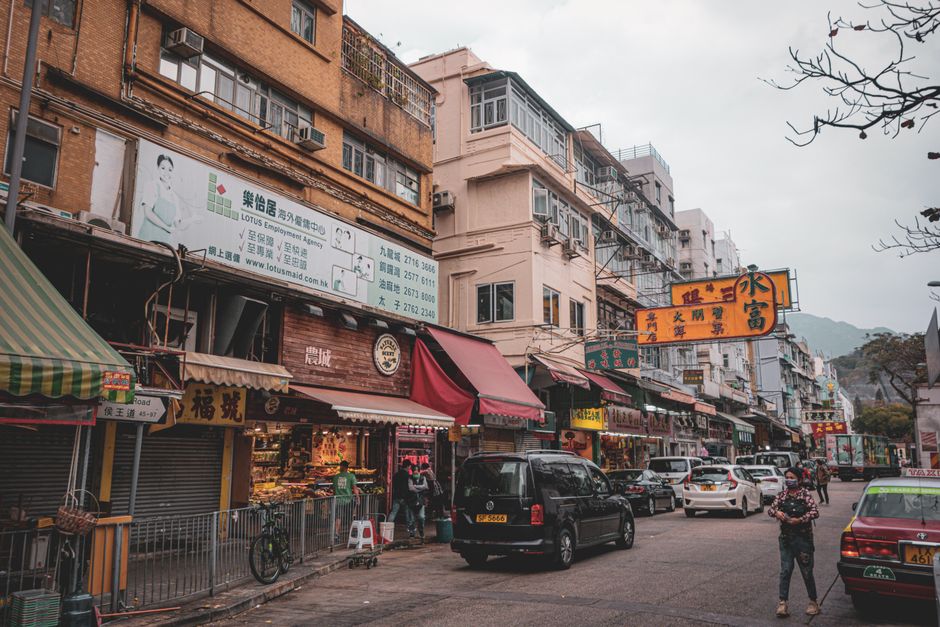
Walk through Chungking Mansions in Tsim Sha Tsui on any weekday afternoon and you'll encounter a microcosm of modern Hong Kong—Pakistani traders haggling with Nigerian merchants, Indian students grabbing lunch between classes, Filipino domestic workers coordinating their schedules. This chaotic, thriving vertical village represents a transformation that didn't happen overnight, but rather accumulated through decades of economic necessity and deliberate policy choices.
Hong Kong's migration story begins with its identity as a colonial trading port. For over 150 years, the city attracted merchants, adventurers, and labourers seeking fortune in one of Asia's most dynamic economies. But the modern wave of multicultural settlement accelerated dramatically after 1997, when the handover created uncertainty among some residents while simultaneously positioning Hong Kong as a gateway between China and the world.
The catalyst was economic. As manufacturing fled to mainland factories in the 1990s, Hong Kong's service sector—finance, logistics, tourism, hospitality—exploded. By 2010, the domestic helper import scheme had brought over 300,000 workers, predominantly from the Philippines and Indonesia. Today, that number exceeds 370,000, with Filipino workers alone comprising nearly 180,000 residents. Sunday gatherings in Victoria Park and Central's Statue Square became iconic scenes of community cohesion, visible proof of demographic shifts.
Simultaneously, Hong Kong's education and business sectors attracted white-collar migrants. Expatriate populations in Mid-Levels and Repulse Bay stabilised around 300,000-plus by the 2020s, while skilled workers from India, Pakistan, and Southeast Asia established themselves across Mong Kok, Causeway Bay, and deeper into the New Territories. Pakistani communities developed particularly around Nathan Road and Jordan; Vietnamese and Nepalese communities clustered in Sham Shui Po and Kwai Chung.
What made this sustainable was Hong Kong's pragmatic governance. Unlike some regional cities, authorities regulated rather than restricted migrant populations. The Foreign Domestic Helper scheme, however contentious, provided a legal framework. NGOs like the International Social Service and Caritas Hong Kong developed integration programmes—language classes in community centres, job training schemes, mental health services.
Yet tensions simmered. Housing pressures mounted as neighbourhoods densified. In 2019-2020, identity questions sharpened amid broader political turbulence. Remittance flows—Filipino and Indonesian workers sending combined billions homeward annually—highlighted Hong Kong's role as an economic engine for entire regional economies.
Today, as Hong Kong recalibrates its global role, its multicultural fabric remains both an economic asset and a demographic reality requiring thoughtful integration. The city didn't stumble into this diversity; it was built by deliberate choices spanning thirty years.
This article was compiled by AI from the sources linked above and screened before publishing. See our editorial standards.